HFA 2026 key insights: How AI and automation are transforming member personalization in fitness clubs
Most operators didn’t get into fitness to manage software. They got into it to coach people, build community, and change lives.
But expectations have changed.
Members now expect the same speed, relevance, and personalization they get everywhere else in their lives. They expect fast answers, smooth scheduling, seamless payments, and communication that reflects where they are in their journey. And most clubs aren’t built to deliver that consistently.
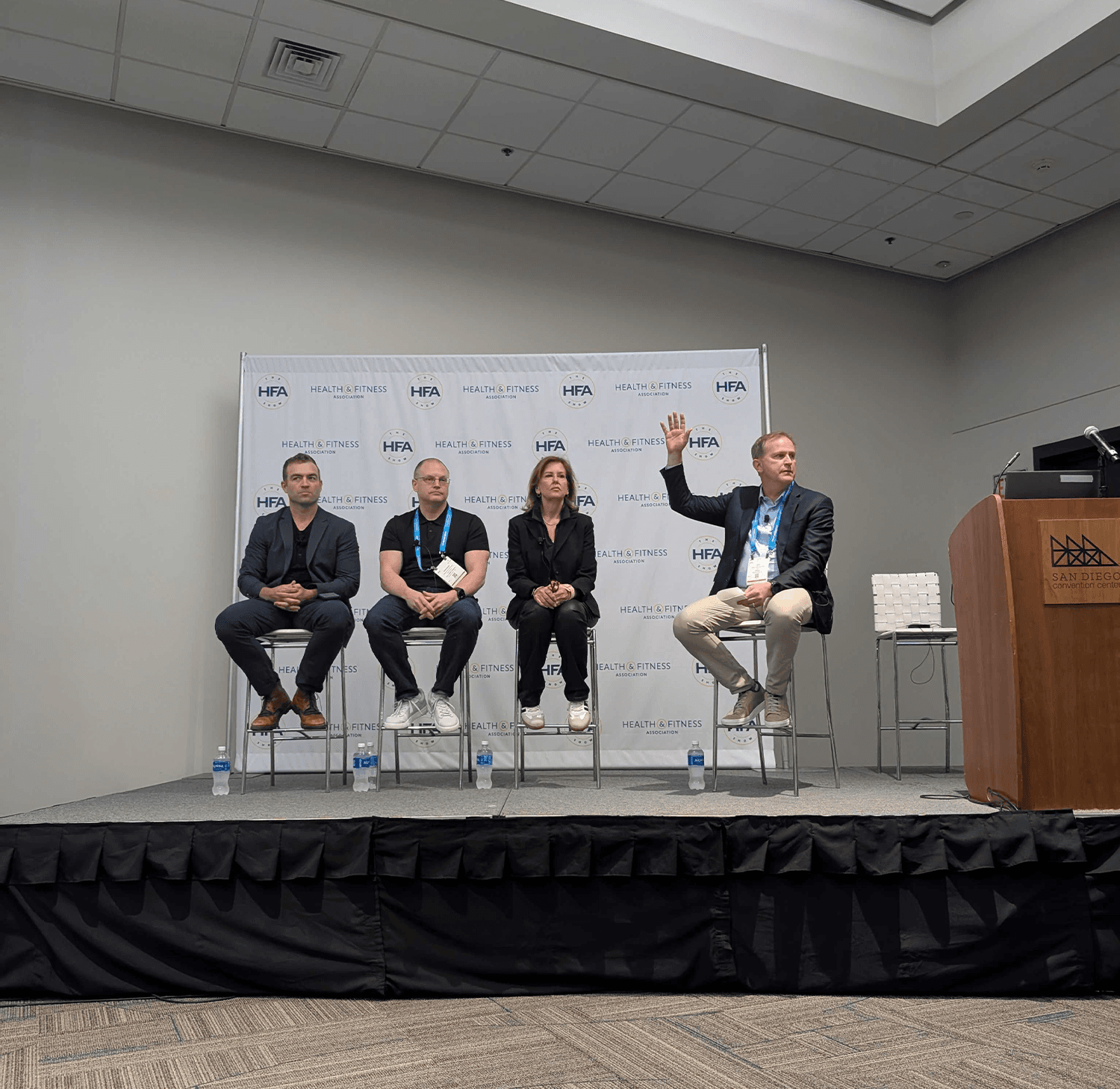
At HFA 2026, we had a direct conversation about what it actually takes to close that gap, not in theory, but in real operations. Jeff VanDixhorn hosted and I had the opportunity to join two operators who are actively implementing AI in their businesses:
- Abraham Gerving, Owner of All Pride Fitness
- Matt Klingler, Founder of Village Fitness & Physical Therapy
The biggest takeaway?
AI delivers value when it is embedded inside the systems that already run the club, powered by real operational data, and aligned to the way the business actually works. AI isn’t about replacing the human experience. It’s about making it possible to deliver that experience consistently, at scale. The operators winning right now are using AI to deliver consistent, high-quality interactions without adding headcount.
Why personalization is now the competitive advantage
Personalization is no longer a differentiator. It is the expectation.
Today’s members expect more and they expect it instantly. They expect fast responses, relevant communication, and seamless experiences across every touchpoint.
They do not separate marketing from operations, or scheduling from billing, or communication from service. To them, it is all one experience. That is why personalization cannot depend on manual effort alone. Clubs can no longer rely on staff to remember every lead, every interaction, every lifecycle stage, and every next best action. At scale, that breaks down.
What we are seeing across the industry is that the clubs creating the strongest member experiences are not simply communicating more. They are executing more consistently. And that consistency comes from connected systems.
The limits of manual member engagement
This is where most operators feel the pressure.
As clubs grow, lead response slows down, follow-up becomes inconsistent, and staff get pulled away from member-facing work to manage repetitive tasks.
Matt described it perfectly during the panel:
“Our staff didn’t have time to respond to every lead, and when they did, it pulled them away from caring for clients. That’s what they’re actually there to do.”

Matt Klingler
Founder, Village Fitness & Physical Therapy
That is not just a staffing issue. It is a workflow issue.
When member engagement depends on manual effort, the club ends up with gaps in responsiveness, inconsistencies in communication, and unnecessary administrative work. That is why the answer is not simply to add another AI tool. It is to build intelligence into the operational workflows the club already depends on.
This is also the shift we break down in The Modern Club Operations Playbook: how leading clubs are moving from fragmented, manual workflows to connected, scalable operations without adding more complexity.
How embedded AI enables personalized member engagement
The most important framing here is this: AI should not sit outside the system of record.
It is most effective when it is embedded directly into the member management system and the workflows connected to it. That is what allows it to operate on real business context, not assumptions.
With platforms like Club Automation and Daxko Engage Pro, communication, member records, billing, scheduling, and engagement data can work together as one connected operational system. That matters because personalization is only useful when it is grounded in what is happening in the business.
Instant, always-on execution
Speed matters, but speed alone is not the point. What matters is reliable execution.
When AI is embedded in the workflow, every lead can get a timely, consistent response without depending on staff availability or one-off follow-up habits. As Matt put it:
“AI follows the script every time. It’s faster, more consistent, and it frees your team to focus on what only humans can do.”
Matt Klingler
Founder, Village Fitness & Physical Therapy
That kind of consistency is what improves conversion. Not because AI is replacing people, but because the system is reliably handling the tasks that should be repeatable.
Personalization through operational data
Personalization does not come from prompts. It comes from context.
That context lives inside the member management system: member status, billing history, booking activity, engagement behavior, service usage, lifecycle stage, and communication history.
That is why AI quality is directly tied to data quality and system integration. If the data is fragmented, the experience will be fragmented. If the system has a unified operational view of the member, the communication can be timely, relevant, and aligned to intent.
This is the real value of connected platforms. They make it possible for outreach, scheduling, billing, and engagement to work from the same source of truth instead of from disconnected systems.
Execution that reflects the club’s real workflow
Another point I emphasized in the panel is that AI should not force operators to adopt unnatural workflows just to use the technology. The workflow should reflect how the club already operates.
You must define your brand voice, your tone, and how you want members to experience your business. Then you train your system accordingly.
That means the system needs to support the club’s real processes, voice, service model, and operational cadence. Setup still matters. Brand voice still matters. Human review still matters. But the purpose is not to build an interesting AI experience. It is to operationalize communication and execution in a way that is repeatable, reliable, and aligned to the business.
When we’ve done this well, both internally and with customers, we’ve seen AI feel like a true extension of the brand. When it’s rushed or unclear, it feels generic immediately.
Automation frees staff to focus on human value
There’s a persistent concern that AI will replace staff. What we’re seeing is the opposite. When repeatable work like follow-up, routing, and routine engagement is handled consistently inside the system, staff get time back for the work that requires empathy, judgment, and connection.
Matt shared how that shift changed how his team operates:
“Once automation handled outreach, our team shifted their time to building relationships and even capturing client stories—we’re actually growing our brand because of it.”
Matt Klingler
Founder, Village Fitness & Physical Therapy
This is where AI creates leverage. You’re not reducing staff. You’re reallocating time to higher-value work. Not efficiency for its own sake but creating space for human connection.
Making AI feel aligned, not artificial
One of the practical challenges operators feel now is making member communication feel natural and on brand. Abraham shared how simply giving his AI a name changed how members interacted with it:
“Once we humanized the AI, gave it a name, a personality—the interaction became much more natural. Members enjoyed engaging with it.”

Abraham Gerving
Owner, All Pride Fitness
What we’ve seen across customers is that transparency and tone matter. AI does need to feel aligned with your brand and your experience.
Why your member management software must be the foundation
What became clear during this conversation is that success with AI isn’t just about the tool, it’s about how your systems work together.
Matt described his earlier environment this way: “Before, everything was disconnected—email, text, phone. Nothing talked to each other.”
When systems are disconnected teams duplicate work, data becomes unreliable, and member experiences break down.
But when your systems are connected, when your CRM, booking, billing, and communication tools are unified, you unlock something much more powerful: consistent, end-to-end member journeys
This is why AI should be embedded within the member management software, not layered on top as a separate tool. The member management software holds the core workflows, the system of record, and the data required to drive execution. When AI operates inside that environment, it can support the way the business already runs.
Integration is what makes AI work better. This is where platforms like Club Automation and Daxko Engage Pro become critical, not because they add another tool, but because they bring everything together.
And importantly, even with strong systems, human oversight still matters. The goal isn’t to remove people from the process, it’s to give them better tools and better visibility.
Security and governance are foundational
If AI is interacting with member data, payments, scheduling, communication, or account activity, then security and governance are baseline requirements.
That means operators need to know where the data lives, how it is accessed, what rules govern its use, and how risk is controlled. It also means AI should be deployed inside secure, governed systems, not through disconnected workflows that sit outside the platform.
Jeff said it in a way that resonated with a lot of operators:
“Security is like fixing your roof. No one sees it, but when something goes wrong, it’s everything.”

Jeff VanDixhorn
CEO, Daxko
That is exactly right. Security is not an enhancement. It is infrastructure.
The right path forward is operational, not experimental
AI in fitness is still in its early stages, and no one has it fully figured out yet. But that’s exactly where the opportunity lies.
That means building on core systems, prioritizing integrated use cases, and embedding intelligence into production workflows where the value is clear and repeatable.
The question is not, “How do we experiment with AI?”
The better question is, “Where can intelligence improve execution inside the systems we already rely on?”
That may mean faster lead response, more consistent follow-up, better routing, stronger retention workflows, or smoother billing-related communication. But the principle is the same: AI should improve the reliability and scalability of the club’s operations, not introduce another disconnected point solution.
The future of fitness is intent-driven and system-led
The future is not more tools. It is more connected execution. Here’s what that looks like in practice:
| Before | After | What changes in practice |
|---|---|---|
| Manual workflows | Embedded workflow automation | Leads receive timely outreach based on real lifecycle and engagement signals |
| Generic communication | Contextual engagement | Messaging reflects membership status, booking behavior, payment state, and member history |
| Reactive operations | Intent-driven execution | The system identifies what should happen next and supports staff in acting on it consistently |
| Disconnected tools | Unified operational platform | Billing, scheduling, CRM, and engagement data work together from one source of truth |
For example:
- Instead of waiting days to follow up with a lead, AI responds instantly.
- Instead of sending the same message to everyone, communication adapts to behavior.
- Instead of reacting to churn, systems identify risk and engage proactively.
A connected, secure platform where intelligence operates inside the workflows that already run the business.
Ready to see it in action?
If you’re exploring how to bring AI, automation, and personalization into your club operations:
Book a Demo with Daxko Club Automation
See how Daxko helps clubs unify data, embed intelligence into operational workflows, and deliver more consistent member experiences at scale.