How to turn your club’s data into smarter business decisions

Most fitness clubs aren’t short on data. They’re short on clarity.
Attendance logs. Billing reports. Membership numbers. CRM activity. Program revenue. Spreadsheets exported weekly. The problem isn’t information. It’s integration.
When reporting lives in disconnected systems, operators lose time pulling numbers and confidence interpreting them. Modern gym reporting software changes that. It connects billing, scheduling, CRM, and operations into real-time dashboards that help leaders answer one essential question:
What reports should gym owners check regularly to run a healthier business?
Let’s break it down.
Why disconnected reporting slows growing clubs
Many fitness clubs experience reporting pain in predictable ways:
- Pulling data manually from multiple systems
- Waiting until month-end to see performance trends
- Inconsistent metrics across locations
- Lack of trust in numbers
- Difficulty holding teams accountable
When billing, scheduling, and CRM tools don’t communicate, reporting becomes reactive. Leaders spend hours compiling data instead of acting on it. And by the time issues appear in static reports – retention drops, utilization declines, revenue dips. The damage is already done.
This is where a modern integrated gym reporting software becomes operationally critical.
What fitness reporting software should do
Modern fitness reporting software isn’t just about generating reports. It should:
- Provide real-time KPI dashboards
- Unify membership, billing, and attendance data
- Surface trends automatically
- Support multi-location visibility
- Turn performance metrics into action steps
Reporting should reduce uncertainty and not create more questions.
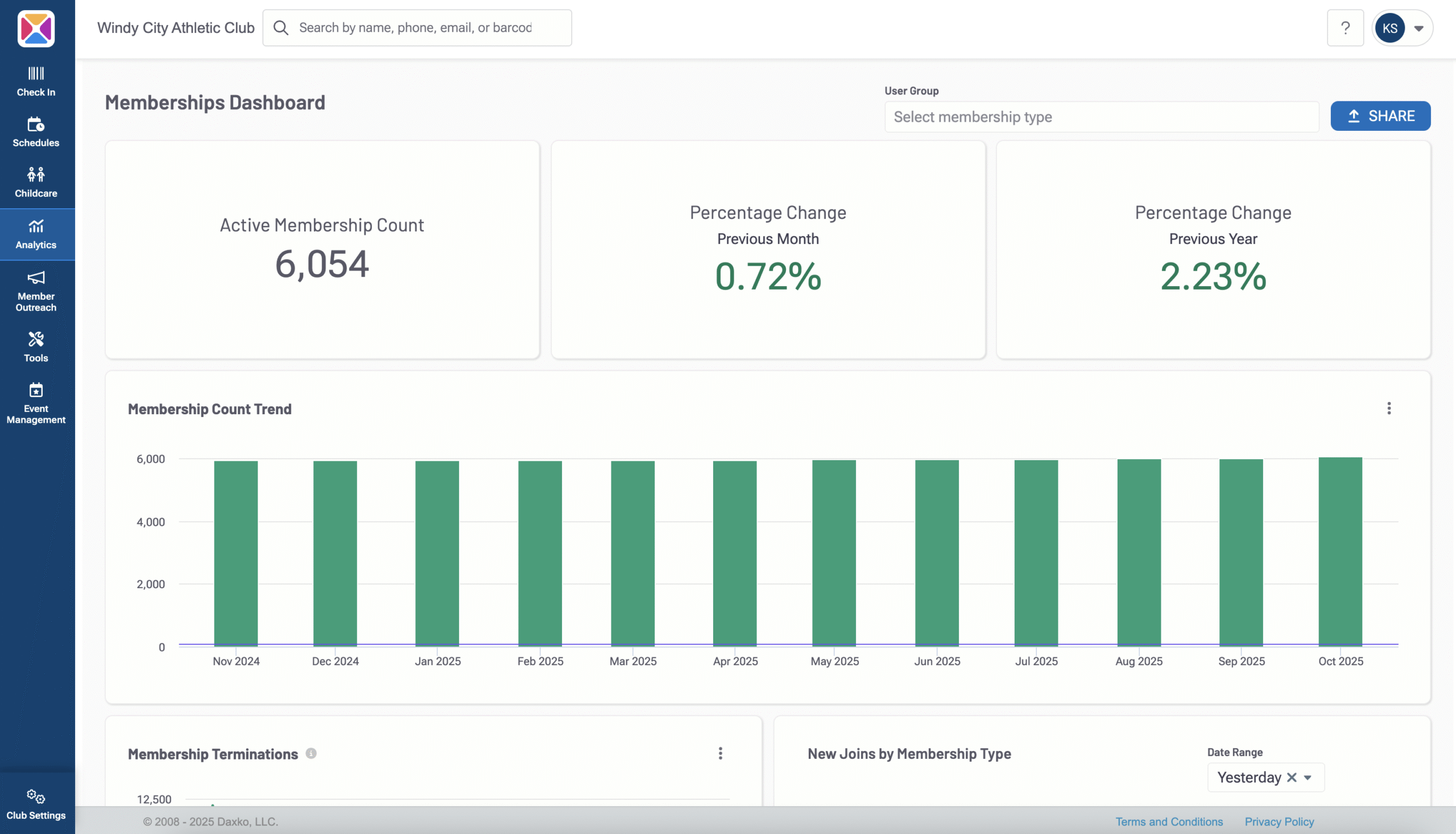
Club Automation – Memberships Dashboard
The weekly KPIs every fitness club operator should track
If you’re wondering what metrics should gym owners track, start here. High-performing clubs review these KPIs weekly:
1. Retention rate
Retention is one of the most important performance metrics for gym owners. Tracking it weekly allows you to identify trends before churn compounds. Strong annual retention often falls near or above 75–80%, but weekly patterns matter more than yearly summaries.
2. Draft success rate
Reliable billing drives predictable cash flow. A draft success rate below 95% can indicate friction in payment methods, billing cadence misalignment, or outdated card information. Integrated reporting highlights declines immediately.
3. New memberships vs. Cancellations
Growth isn’t just new sales. It’s net movement. Dashboards should show:
- New joins
- Cancellations
- Freezes
- Net gain/loss
In real time.
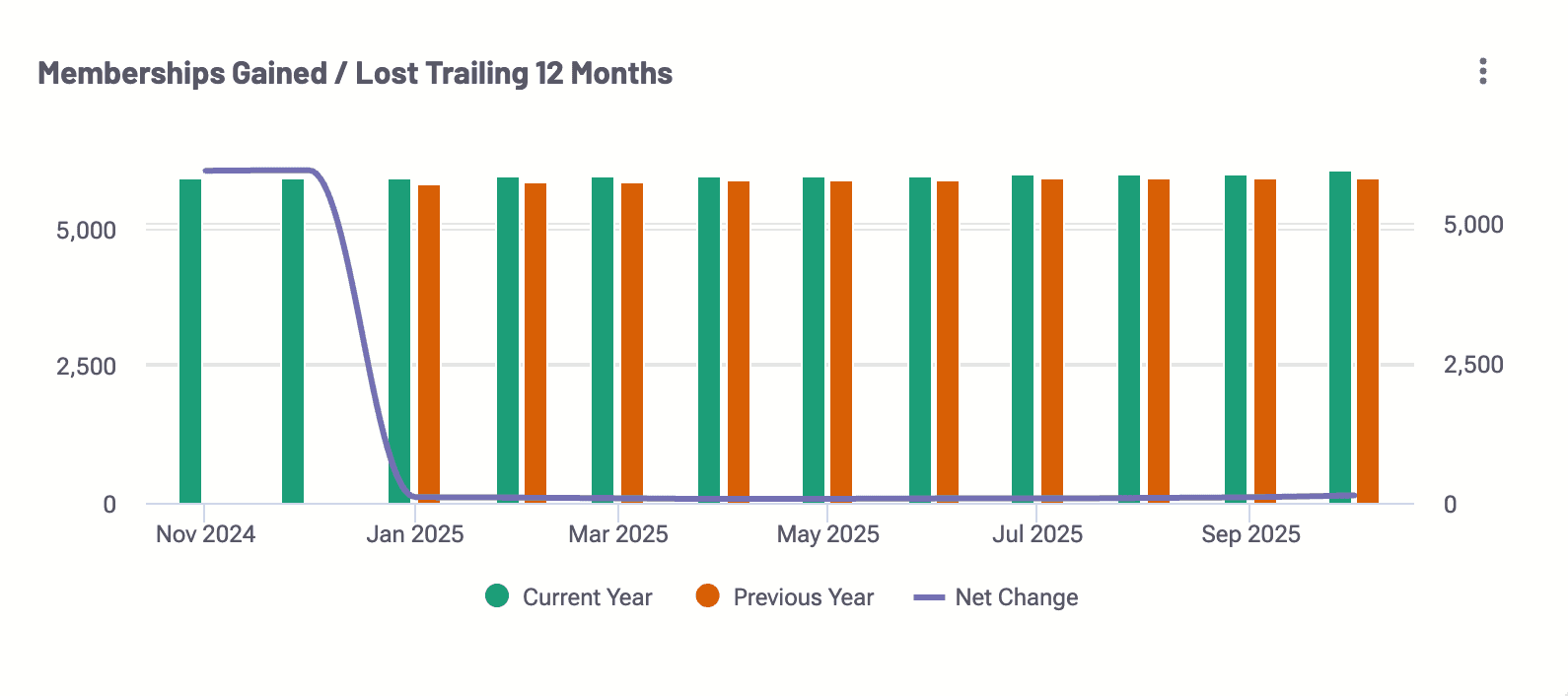
Club Automation Dashboard – Memberships Gained/Lost
4. Average Revenue Per Member (ARPM)
ARPM reveals the health of your pricing structure and add-on strategy. Tracking weekly changes helps leaders identify:
- Attach rate improvements
- Programs upsell success
- Discount overuse
5. Lead-to-Member conversion rate
Your CRM and reporting should connect seamlessly. Without integration, sales metrics often live separately from operational data. Conversion tracking improves accountability and forecasting accuracy.
6. Program & class utilization
Empty class spots represent missed revenue opportunities. Weekly utilization reporting shows:
- Peak-time overcapacity
- Off-peak underutilization
- Demand trends
This supports smarter scheduling decisions.
How clubs can use data to improve member retention
Tracking numbers isn’t enough. The real power of a fitness club reporting software lies in connecting metrics to behavior. Here’s how clubs use data more intelligently:
Spot attendance declines early
If a member’s visits drop significantly over 30 days, reporting tools should flag it. Retention efforts can begin before cancellation.
Identify billing friction
If draft failures increase, dashboards should highlight the trend automatically. Instead of discovering problems during reconciliation, leaders act immediately.
Evaluate program effectiveness
Tracking program attendance, repeat participation, and revenue reveals which offerings strengthen long-term engagement. Data removes guesswork from programming decisions.
From data to accountability
Clear dashboards improve team accountability. When performance metrics for gym owners are visible:
- Managers know what to prioritize
- Sales teams track conversion trends
- Billing teams monitor success rates
- Corporate leaders compare location performance
Transparency improves focus. Accountability improves execution.
Fitness business dashboards for multi-location growth
As clubs expand, reporting complexity increases. Without centralized visibility, leaders struggle to answer:
- Which location has the strongest retention?
- Where is billing friction highest?
- Which programs drive the most revenue?
- How does utilization vary across sites?
Multi-location fitness business dashboards provide:
- Side-by-side performance comparisons
- Standardized reporting templates
- Corporate-level controls
- Location-specific filtering
Scaling becomes strategic instead of chaotic.
Why real-time reporting changes decision-making
Static reports tell you what happened. Real-time reporting tells you what’s happening. When leaders can see:
- Revenue trends this week
- Retention signals shifting
- Sales pipeline health
- Attendance fluctuations
They make faster decisions. And faster decisions protect profitability.
The role of AI in modern gym reporting software
AI-powered reporting doesn’t replace leadership judgment. It enhances it.
AI tools within gym reporting software can:
- Flag anomalies automatically
- Highlight negative trends before they escalate
- Surface engagement risks
- Identify revenue leakage
Instead of searching for issues, operators are alerted to them. This shifts reporting from passive analysis to proactive management.
How Daxko Club Automation turns data into decisions
Daxko Club Automation’s integrated analytics and reporting tools connect:
- Member management
- Billing & payments
- Scheduling
- CRM activity
- Attendance data
Into unified dashboards.
Leaders can monitor:
- Retention and churn trends
- Draft success rates
- Revenue by membership type
- Program utilization
- Lead conversion performance
- Multi-location comparisons
All without exporting spreadsheets.
Clear, connected data improves:
- Performance visibility
- Operational accountability
- Strategic planning
- Profitability forecasting
And when reporting is unified inside your gym management software, AI-powered automation becomes more powerful.
Want to see the bigger picture?
If you’re evaluating platforms, it’s worth understanding how reporting fits into the full operational ecosystem. For a deeper look at what modern AI-powered gym management software should deliver – from billing automation to retention analytics; read our complete guide:
Gym Management Software in 2026: The AI-Powered Guide for Growing Fitness Clubs
When reporting, billing, CRM, and scheduling live inside one system, smarter decisions become easier.
Ready to turn your club’s data into clear decisions?
Stop stitching together spreadsheets. Stop waiting until month-end to understand performance. Start running your club on connected gym reporting software built for real-time visibility and smarter decisions.
Frequently Asked Questions about fitness reporting software
What reports should gym owners check regularly?
Gym owners should review weekly KPIs including retention rate, draft success rate, new memberships vs. cancellations, average revenue per member, lead conversion rate, and class utilization. These performance metrics give early insight into revenue trends, engagement risks, and operational efficiency.
What are the most important gym KPIs?
The most important gym KPIs include retention rate, churn rate, draft success rate, average revenue per member (ARPM), cost per acquisition (CPA), and program utilization. Tracking these metrics inside integrated gym reporting software helps operators make faster, data-backed decisions.
How can gym reporting software improve member retention?
Gym reporting software improves retention by identifying behavioral trends such as declining attendance, missed payments, or reduced engagement. When integrated with CRM and billing systems, it allows operators to act early through automated follow-ups and targeted retention efforts.
How often should fitness clubs review performance metrics?
High-performing fitness clubs review core KPIs weekly and conduct deeper financial and retention reviews monthly. Regular review of gym KPIs helps identify issues early and supports consistent accountability across teams.
Can gym reporting software support multi-location clubs?
Yes. Advanced fitness business dashboards provide centralized visibility across multiple locations. Leaders can compare retention, revenue, utilization, and billing performance side-by-side, ensuring consistent standards and scalable growth.
How does AI improve gym reporting software?
AI enhances gym reporting software by automatically flagging anomalies, identifying churn risks, surfacing underperforming programs, and highlighting revenue gaps. Instead of searching for trends manually, operators receive proactive insights that simplify decision-making.